
September 8, 2026
The Bell, the Map and the Shortlist
Sheinbaum answers Trump's map, Quiñones makes the Ballon d'Or 30, and what this week's PISA results actually mean if you're moving with kids.
September is the month Mexico turns the volume up on being Mexico, and this week the news cooperated. There's a map, a bell, a striker on a shortlist he was never supposed to make, and a school test result that deserves a closer look than the headline gives it.
Trivia
Hidalgo rang the bell in 1810 and the fighting was over by 1821. In what year did Spain finally get around to admitting Mexico was independent?
This Week in Mexico
- Trump posted a map Sunday night with Mexico, Canada and most of the neighbourhood painted in stars and stripes, and Sheinbaum answered that Mexico is not and will not be a colony or protectorate of anyone. She never used his name, and she did point out it's the month of the homeland.
- Julián Quiñones is on the 30-man Ballon d'Or shortlist, the first Mexican there in 19 years, after four World Cup goals and 33 in the Saudi league last season.
- New PISA results put four in ten Mexican 15-year-olds below the basic level in math, reading and science, with the math score the lowest since 2006.
- Mexican truckers blocked the Mexicali border crossing after 17 drivers had their US B-1 visas pulled; the industry says the real total is closer to 25,000 and that drivers are losing visas for things like a delivery running past four days.
- Remittances have now risen six months in a row, $5.57 billion in July, but with the peso under 17 the families receiving them got about 3.7 percent fewer pesos than a year ago.
- From September 15, Mexicans will need an e-visa for Thailand again, ending two years of walk-in 60-day entry.
- Hacienda handed Congress the 2027 budget today; the number everyone reads first is the deficit, which the government has been aiming to bring from 4.1 percent of GDP this year to about 3.5 next, with all three ratings agencies watching.
- Car production fell for a fourth straight month in August, down 1.4 percent, while exports still edged up to 300,475 vehicles.
Worth Knowing: Schools and Kids in Mexico
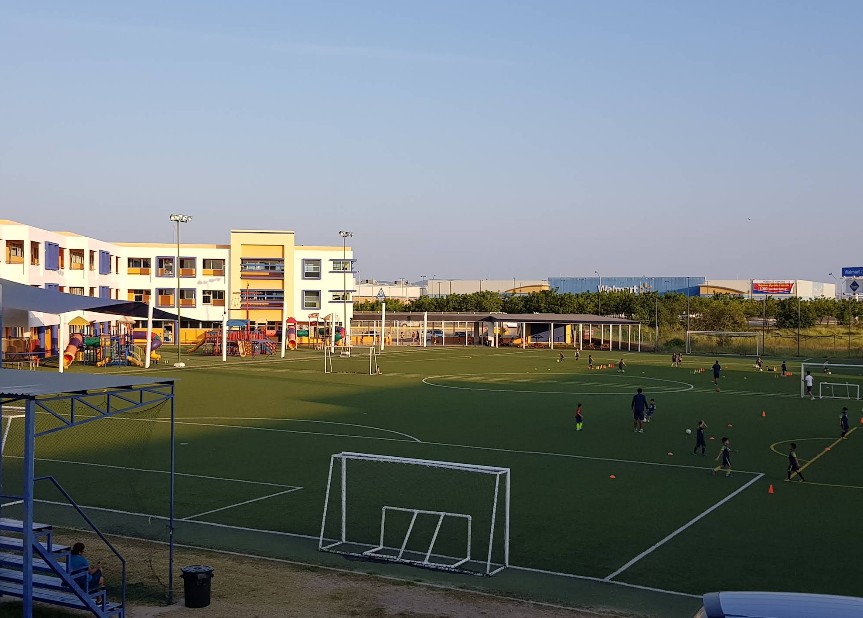
The PISA numbers this week are rough. Four in ten Mexican 15-year-olds tested below the basic level, and the math score is the lowest the country has posted in 20 years. If you're thinking about moving with kids, that headline probably landed differently for you than for everyone else.
Here's how I read it. PISA measures the national system as a whole, and the national system is mostly public schools, a lot of them stretched thin. That's a real problem for Mexico. It is not a description of the school your kid would actually attend, because that school is a choice you get to make, and the menu is longer than most people expect.
Public school works for some foreign families, mostly younger kids who already speak Spanish and parents who can keep up with a WhatsApp group in Spanish, because that's where all school communication lives now. For a teenager with no Spanish, it's a hard road and I wouldn't start there.
Most foreign families end up in private school, and "private" covers a wide range. There's a big middle tier of local private schools with smaller classes and more structure. Above that, bilingual private schools. Above that, international schools running IB or an American or British curriculum, mostly in big cities and expat hubs, with prices to match and maybe waiting lists.
"Bilingual" is the word to be careful with. Nobody standardizes it. At one school it means English class three times a week. At another it's half the day in English with fluent teachers. Ask what percentage of instruction is in English, which subjects, whether the teachers actually speak it, whether parent communication is available in English, and whether they've had foreign kids before. The answers vary more than you'd think, and the school with the nicest website is not always the one with the best answers.
On cost, tuition is usually 10, 11 or 12 payments a year, and it's rarely the whole number. Add the inscripción, an annual enrollment fee, plus uniforms, books, transportation and probably a Spanish tutor the first year. Per child, monthly budgets run from under $3,000 pesos (about $175 US) at the low end to well over $20,000 pesos at a handful of elite schools in Mexico City. That top number is the extreme. You'd struggle to find it anywhere else in the country even if you tried. The realistic range for most families sits a long way below it, and still well under private school back home.
Age matters more than anything else. Elementary is usually manageable; kids adapt and make friends. Middle school is harder socially. High school is the one to plan carefully, because credits, transcripts and diploma recognition all have to line up for university. If your kid is a year or two from graduating, online school or waiting to move is often the right call.
The biggest mistake families make is signing a lease first. The better order is: pick a shortlist of cities, find the schools, confirm they have space in the grade you need, then choose the neighbourhood around the commute, then the house. Start contacting schools six to twelve months out. Have passports, birth certificates, report cards and vaccination records ready, and expect some schools to ask for translations or apostilles.
One more thing on Spanish. Kids don't just soak it up. Younger ones pick up playground Spanish fast, and that's wonderful to watch. Academic Spanish, the kind you need to read a science textbook and write an exam, takes longer, and a kid who's chatting with friends at recess isn't necessarily ready for a test. A tutor the first year is money well spent.
There's a lot more on all of this in the kids and schools guide on the site.
Más México

In September 1810 a parish priest named Miguel Hidalgo was part of a plot to break Mexico away from Spain. The plot was discovered. Word reached him in the small hours of September 16 in the town of Dolores, Guanajuato, and rather than run, he went to the church and rang the bell to wake everyone up. When the town gathered, he told them to rise. That bell ringing, and the speech that followed, is the Grito de Dolores, and it's the moment Mexico counts as the start of its independence.
The bell weighs about 750 kilos, was cast in 1768, and hung in that same tower for another 86 years. The town very nearly kept it. When Mexico City officials started asking for it in 1887, locals told them it had been melted down, and it took the government almost ten years to figure out it was still up there. In 1896 Porfirio Díaz had it brought to the capital, promising to send it back after a year. He didn't. On the night of September 15, the eve of his own birthday, he stepped onto the balcony of the Palacio Nacional just before 11 with a flag in one hand and the bell rope in the other.
That's the ceremony you'll see next Tuesday night. The president comes out to the balcony, calls out the names of the heroes of independence one by one, Hidalgo, Morelos, Josefa Ortiz de Domínguez and the rest, and after every name the crowd roars back "¡Viva!" Then "¡Viva México!" three times, the bell, the flag, the anthem, the fireworks. Last year around 280,000 people packed the Zócalo to answer Sheinbaum. The same thing happens at the same hour in every town square in the country, with the mayor or governor doing the honours, and in Mexican embassies around the world.
I've stood in the plaza in my town for this several times now, and as someone who moved here from another country I can tell you it is hands down the most patriotic, most emotional national moment I've ever been part of. Standing in a crowd of thousands yelling Viva México is not something you forget.
Every state got an exact copy of the bell in 1960. Dolores Hidalgo is still waiting for the original.
If you've never been to Mexico, this is the week the whole country is worth a look. Start with the free guides at movetomexiconavigator.com, they're the questions I wish someone had handed me before we came.
Trivia Answer
1836, and not until December 28. Spain took 26 years after the Grito to sign the Santa María-Calatrava treaty recognizing Mexico as a free, sovereign and independent nation. The Vatican beat them to it by a month.
Nos vemos (See you). Corey
Some links go to Spanish-language sources. In Chrome or Edge, right-click the page and choose Translate to English. On iPhone Safari, tap the AA icon and choose Translate.