

Taxes and Cross-Border Money in Mexico
I'll be blunt about this one from the start: taxes are the single area of your move where I'd tell you not to wing it, not to trust a Facebook group, and not to rely on a general article, including this one, for your actual decisions. I'm not a tax professional, and cross-border tax is genuinely fact-specific. What I can do is help you understand the landscape well enough to ask the right questions and know when you need real professional help. That understanding alone puts you ahead of most people who move here.
The mistake almost everyone makes
Here's the misconception that causes the most trouble: people assume that immigration residency and tax residency are the same thing. They are not.
Immigration residency decides whether you can legally live in Mexico. Tax residency decides where your income can be taxed. You can hold a Mexican resident card and still have an open question about which country, or countries, get to tax you. Getting your visa approved settles the first question and tells you almost nothing about the second.
The practical takeaway: the more your real life shifts to Mexico (living here full-time, establishing a home, working from here, earning money connected to Mexico), the more you need an actual cross-border tax review, not an assumption.
What Mexico's side looks like
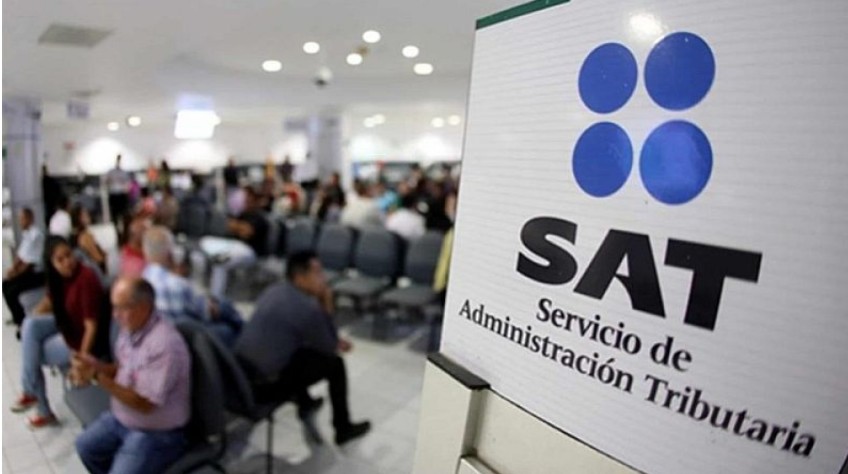
Mexico's tax authority is SAT. Its taxpayer ID is the RFC, which you'll encounter for banking, property, vehicles, and formal invoices. Formal invoices run through an electronic system called CFDI, and a valid tax invoice is a factura, terms you'll hear constantly if you do anything formal here. Income tax is ISR and value-added tax is IVA (often 16%, though whether it applies depends on the activity).
The key concept to sit with: if Mexico considers you a tax resident, it generally looks at your worldwide income, not just money you earn inside Mexico. That doesn't automatically mean you'll owe Mexican tax on everything, treaties and foreign tax credits exist, but it does mean "my income is paid in Canada, so Mexico doesn't matter" is not a safe assumption.
Remote work is not automatically tax-free

A lot of people believe that because their work is online and their employer or clients are abroad, it's somehow tax-neutral. That's one of the riskier assumptions out there. If you're physically doing the work from Mexico, the work is arguably happening in Mexico, and that can raise tax-residency, income-sourcing, and employer-compliance questions. Mexico does not have a tidy "digital nomad, pay no tax" loophole. Plenty of remote workers live here perfectly legitimately, but they treat immigration, tax residency, and home-country obligations as separate things to sort out, not one thing that solves itself.
If you're Canadian
The big one for Canadians: you don't simply "choose" to be a non-resident of Canada. The CRA looks at your residential ties, a home available to you, a spouse or kids still in Canada, provincial healthcare, licences, and so on. Keeping strong ties while claiming you've left creates an inconsistent picture.
A few things worth flagging with a professional: departure tax can apply to assets with large unrealized gains when you change residency, Canadian-source income like CPP, OAS, and pension or RRSP/RRIF withdrawals can still be taxed by Canada (sometimes at treaty-reduced rates, which is a planning opportunity), and a TFSA is not magically tax-free once you leave, contributing as a non-resident can even cause penalties. Keeping provincial healthcare while claiming non-residency is one of those inconsistencies that deserves a careful look.
If you're American
For US citizens and green card holders, here's the reality that surprises people: moving abroad usually does not end your US filing obligations. The US taxes its citizens on worldwide income no matter where they live, so expect to keep filing.
Some specifics to raise with a US-Mexico specialist: the Foreign Earned Income Exclusion can help, but only with qualifying earned income, it generally does not cover pensions, Social Security, or investment income. Foreign account reporting (FBAR and FATCA/Form 8938) can apply once your Mexican account balances cross certain thresholds. State tax residency doesn't automatically end when you leave the country. And a crucial retirement point: original Medicare generally does not cover you in Mexico, so you need a real Mexico healthcare plan rather than assuming it travels with you.
Rental income and Airbnb
If you rent out Mexican property, treat that as a high-priority tax matter. Mexican rental income is Mexico-connected income, and it can involve RFC, the right SAT regime, ISR, possibly IVA, and facturas. One specific trap: if you run a short-term rental and the platform withholds some tax, that withholding does not automatically mean your obligations are complete. And a property manager collecting your rent is not the same as your taxes being handled, confirm exactly who reports what.
The myths that get people in trouble
A quick honest list of beliefs that cause real problems:
- "Immigration residency means I'm automatically a tax resident." (Or automatically not one.) Neither is true.
- "I'm paid in Canada or the US, so Mexico doesn't matter." Not if you're a Mexican tax resident.
- "I pay tax at home, so Mexico can't tax me." A treaty may reduce double taxation, but it rarely makes the second country simply disappear.
- "A tax treaty means I only pay once, automatically." Treaties reduce double tax, they don't erase filing and documentation.
- "Remote work isn't really work because it's online." Where you physically do it matters.
- "Moving savings to Mexico is taxable." Not by itself, but keep clean records of where the funds came from.
Where this stops being general
This is the topic where I'll be the most direct with you: your actual tax situation depends on your citizenship, your residency status, your income types, where you physically work, what you own, and your ties to home. Two neighbors on the same street can have completely different answers. There is no honest way for a general guide, or even a personalized relocation plan, to replace a qualified cross-border tax professional here.
So my genuine advice is simple. Understand the landscape above so you know what you're dealing with, then budget for a proper conversation with a specialist who knows both Mexico and your home country before you make big moves. It's one of the best-value professional fees you'll pay in this whole process, and it's the one place where trying to save it usually costs far more later.
This is general educational information, not tax, legal, or financial advice, and I'm not a tax professional. Please confirm anything that affects your money with a qualified cross-border specialist.