

Banking and Money in Mexico
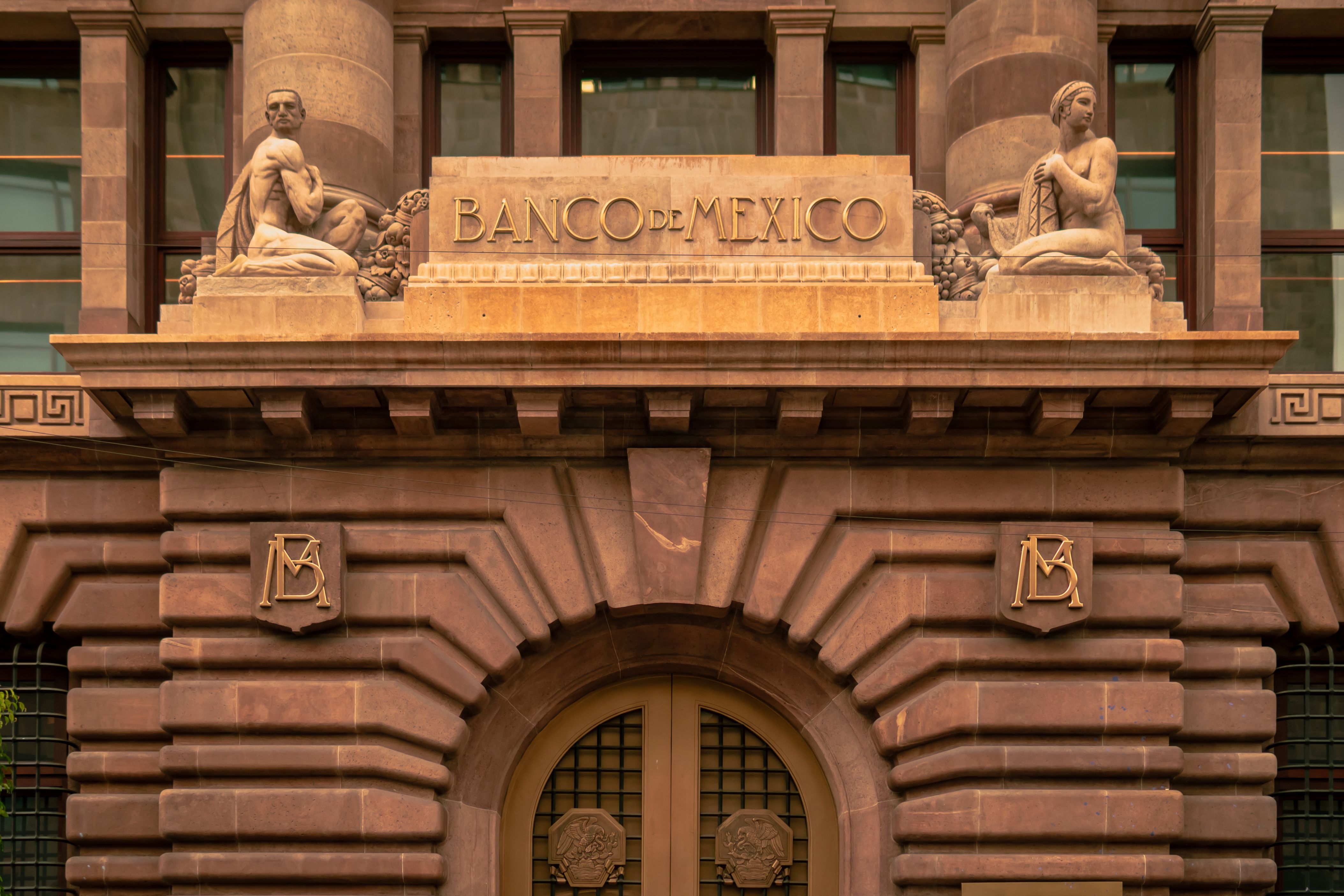
Money in Mexico works differently than most newcomers expect, and getting your setup wrong is one of the more stressful ways to start a move. The good news is that once you understand how money actually flows here, it's very manageable. You just want to arrive with a plan instead of figuring it out at a cash register with a declined card.
Nobody here uses just one method
The first thing to understand is that daily money life in Mexico is a mix. It's not purely cash, not purely cards, not purely bank transfers. Most people end up using several tools: a foreign card or two, cash for small things, a Mexican bank account for local payments, bank transfers for rent and services, and a way to move money in from home.
The single best principle is redundancy. Your setup should never depend on one card, one bank, one ATM, or one app. A resilient setup has backups: some cash, at least two cards from different issuers, working online banking, a transfer method, and for most long-term residents, a local account. Arriving with one card and no cash buffer is the classic avoidable mistake.
Do you actually need a Mexican bank account?
It depends on how you're living here. A short-term visitor or a simple snowbird can often get by on foreign cards, cash, ATMs, and transfer tools. But if you're renting long-term, paying utilities and local services, paying a private school, or making regular local payments, a Mexican account becomes genuinely useful, sometimes close to necessary.
Here's the important timing warning: do not assume you'll walk off the plane and open an account that afternoon. It often takes residency and some setup. Plan to cover your first 30 to 60 days with backup payment methods while you get established.
Opening one is not always simple
When you do open an account, expect banks to ask for a stack of documents: your passport, your Temporary or Permanent Resident card, your CURP (Mexico's population ID, which you get through residency), often your RFC (the tax ID from SAT), a Mexican proof of address, and a Mexican phone number.
And here's a quirk that frustrates people until they understand it: branch-to-branch variation is real. One branch of a bank may turn you away while another branch of the exact same bank opens the account without issue. Staff interpretation of the rules varies. If you hit a no, it's often worth trying a different branch rather than assuming you're ineligible. The major retail banks foreigners commonly use include BBVA, Banorte, Santander, and others, but the "best" one is simply whichever branch near you actually processes your account smoothly.
SPEI and CLABE: what everything runs on
Two terms you'll use constantly. SPEI is Mexico's fast electronic bank-transfer system, and CLABE is the standardized 18-digit account number that transfers go to. Once you live here, rent, school payments, deposits, contractors, and person-to-person payments all tend to run on SPEI transfers to a CLABE.
One safety habit worth building immediately: a payment screenshot can be faked. For anything important, confirm the money actually landed in the real account rather than trusting a "sent!" screenshot from the other party.
Getting money into Mexico
You'll need a reliable way to move money from your home country. Wise is popular for sending funds straight to a Mexican bank account via CLABE and tends to have good rates. Services like Remitly and Western Union are useful for cash pickup or for recipients without a bank account. Bank wires (SWIFT) are for the big, formal stuff like property or vehicle purchases.
There's no universal best. Compare fees, exchange rate, speed, and limits, and don't rely on a single method with no backup. And if your income is in Canadian or US dollars while you spend in pesos, remember the exchange rate is a real part of your budget, build in a buffer.
Cash still matters
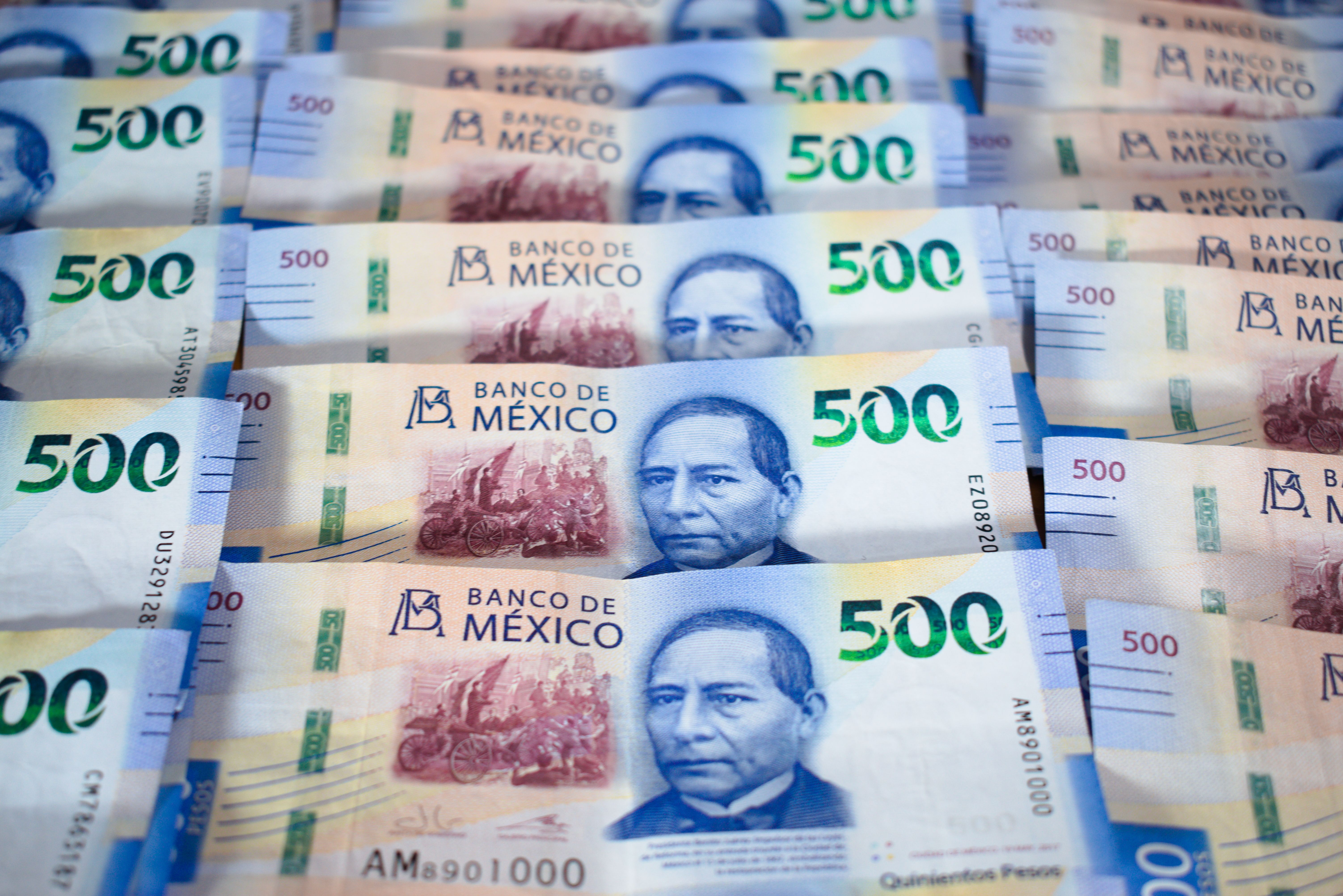
Even in a card-friendly country, cash keeps its place. You'll want it for markets, taxis, street food, tips, small restaurants, service workers, and smaller shops. Cards are widely accepted at supermarkets, chain stores, larger restaurants, private hospitals, and bigger pharmacies. Carry enough cash for a normal day, keep small bills, but don't walk around with large amounts and don't make cash your only plan.
Cards and ATMs: two habits that save money
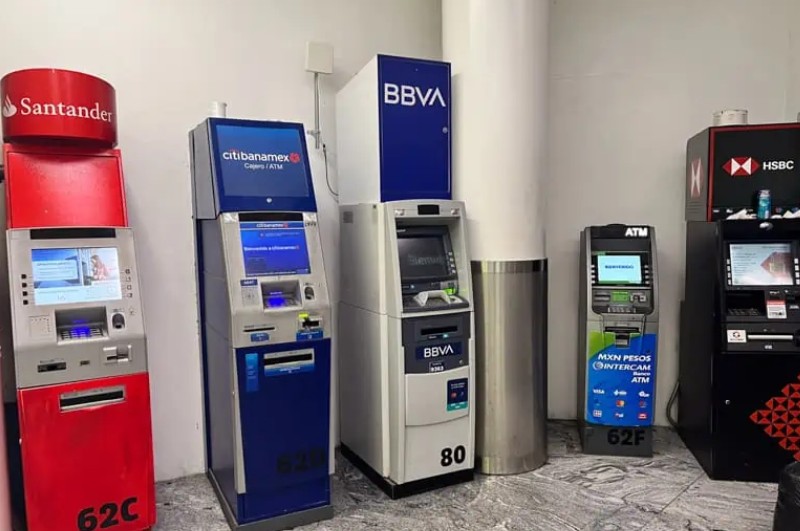
Two practical things. First, bring at least two cards from different issuers. Foreign cards get declined or temporarily blocked more than you'd like, and a single point of failure is exactly what you don't want in a new country.
Second, and this one costs people real money without them noticing: the ATM will offer you its own exchange rate, and you decline it. Partway through the withdrawal, the screen shows you a conversion rate and asks whether you accept it. Say no. Decline the conversion. The machine's rate is almost always worse than the one your own bank would give you, and accepting it is how you quietly lose money on every single withdrawal. Card terminals in shops do the same thing when they ask to charge you in dollars instead of pesos, same answer, always take the pesos. This is sometimes called dynamic currency conversion, but you don't need the term, you just need to decline it every time. Use ATMs in secure, well-lit locations to reduce skimming risk, and make sure you know how to freeze a card from your banking app.
Don't accidentally break your home-country banking
This is the section people wish they'd read first. Moving abroad does not guarantee your home-country accounts keep working as before. Banks, brokerages, credit cards, and pension providers may have rules tied to your address, phone, or residency.
Before you move: confirm your home bank and brokerage will keep working with you living in Mexico, test your online banking and two-factor authentication codes from a Mexican connection, and sort out where replacement cards can be mailed. And the big one, which ties into your phone plan: do not cancel your home-country phone number until every single financial login works without it. A huge number of banks text your verification code to that old number, and losing access to it while abroad is a genuine nightmare to unwind.
A quick word on scams
The common money scams here are worth knowing: ATM skimming, fake rental listings demanding deposits, faked payment screenshots, WhatsApp messages that suddenly "change" the payment account, and fake bank-support calls. The defense is simple and consistent: for any important payment, verify the instructions through a second independent channel, and confirm funds actually arrived in the real account. Pressure to pay right now is itself a red flag.
Where this stops being general
This is the shared playbook that applies to almost everyone. What it can't tell you is exactly which setup fits your situation, because that depends on whether you're renting or buying, whether you have kids in school, how you're paid, your residency status, and your home-country institutions. A snowbird and a remote-working family need very different money plans.
And the honest note I'll add: banking is one of those areas where a little boring preparation before you move prevents most of the pain after. The people who struggle are almost always the ones who assumed it would all just work.