

July 22, 2026
Prices Now Rise Slower in Mexico Than at Home
Inflation dips below the US rate, a $20 line skip at the Mexico City airport, banking news that helps foreigners, plus what residency actually takes in 2026.
This first issue has been a long time coming, and I've got a backlog of things I've been wanting to tell you about this country. I'm a Canadian who moved his family to Mexico, and every week Mexico on My Mind will bring you the news worth knowing if you love this place or are quietly planning your own move, plus one deep dive that actually answers a question. Let's get into it.
Trivia
With this summer's tournament, Mexico pulled off a World Cup first that no other country on earth can claim. What is it? Answer at the bottom.
This Week in Mexico
-
Mexico's annual inflation fell to 3.37% in June, the lowest reading in over five years, and it now sits below the US rate. If you're budgeting a move, the number you pencil in for groceries is holding steadier here than the one back home.
-
A Mexico News Daily writer spent time in Guanajuato asking the exact question this newsletter exists for, could we live here. If you're building a shortlist of cities, her checklist of what matters in a home base is worth borrowing.
-
Guadalajara's airport moved 6 percent more passengers during the World Cup, a hint of where Mexico's second cities are headed.
-
The federal government announced a plan to harvest Quintana Roo's sargassum at sea and turn it into fertilizer, which would be a better ending than the beach.
-
USMCA talks are moving again, with the US trade representative calling Mexico "pragmatic" while Canada offers no concessions.
-
Washington added the Cártel de Juárez and Los Viagras to its list of terrorist organizations, a designation the US ambassador publicly celebrated.
-
Regulators gave Nu, the digital finance giant, final approval to become a full bank, with 30 days to complete the conversion. More regulated competition in Mexican banking is good news for anyone who has ever tried to open an account here as a foreigner.
-
Mexico City's main airport, which moved 44 million passengers last year, will now sell you a 20 US dollar pass to skip the security line.
-
A 69-year-old woman told Infobae she got her sight back overnight after a five-minute eye surgery at IMSS, done with local anesthesia and no hospital stay. Public healthcare here has real problems, and then it hands somebody her eyesight back in an afternoon. Both things are true.
Worth Knowing: What Mexican residency actually takes in 2026
The move-to-Mexico plan most people start with is the one that's quietly dying. Fly down as a tourist, get 180 days, leave, come back, repeat forever. Those 180 days were always a maximum, not a promise, and immigration officers now use that discretion. Some visitors get 180, some get far less, and repeated long stays are exactly the pattern that attracts questions at the booth. If Mexico is becoming your home, the tourist route is wishful thinking dressed up as a strategy.
The real path is residency, and it comes in two flavors. Temporary residency starts with a one-year card, renewable up to four consecutive years. Permanent residency has no expiry for adults. Either way, the consulate in Canada or the US only gives you a visa sticker. The actual card comes from the immigration institute (INM) inside Mexico, through a process called Canje, and you have 30 days after crossing the border to start it. Miss that window and you have a problem.
Now the money. For 2026, the screening numbers for temporary residency run around US$4,400 a month in income, or about US$75,000 in savings or investments held for a full 12 months. In Canadian terms, the Leamington consulate has used figures around CAD $6,461 a month or CAD $108,894 in average balance. Direct permanent residency is a much bigger ask, roughly US$7,400 a month or US$298,000 in assets, and some consulates will only consider you if you're retired.
The fine print trips up more people than the amounts do. Many consulates read "monthly income" as net, after tax, so if only your gross clears the bar, you're borderline. Savings need a 12-month history, not a balance you moved in last week. Joint accounts can get discounted or doubled. Crypto and gold don't count.
Here's the part that changes the math for most families. You do not need permanent-residency money, ever, if you're patient. Hold temporary residency for four consecutive years and you can exchange it for permanent without re-proving your finances. The exchange isn't automatic, you have to file it with INM inside the right window, but it turns the scary number into a waiting game. And if you have a Mexican spouse or a Mexican-born child, family unity routes can skip the financial screening entirely. For what it's worth, my family went the temporary residency route, and the four-year exchange path is the one we're on.
One warning before you rush to permanent: permanent residents generally can't keep a foreign-plated car outside the border free zones. If your truck matters to you, that alone can make temporary the smarter status.
Every consulate sets its own thresholds, documents, and moods, so before you count on any number here, check the website of the consulate where you'd actually apply.
Más México
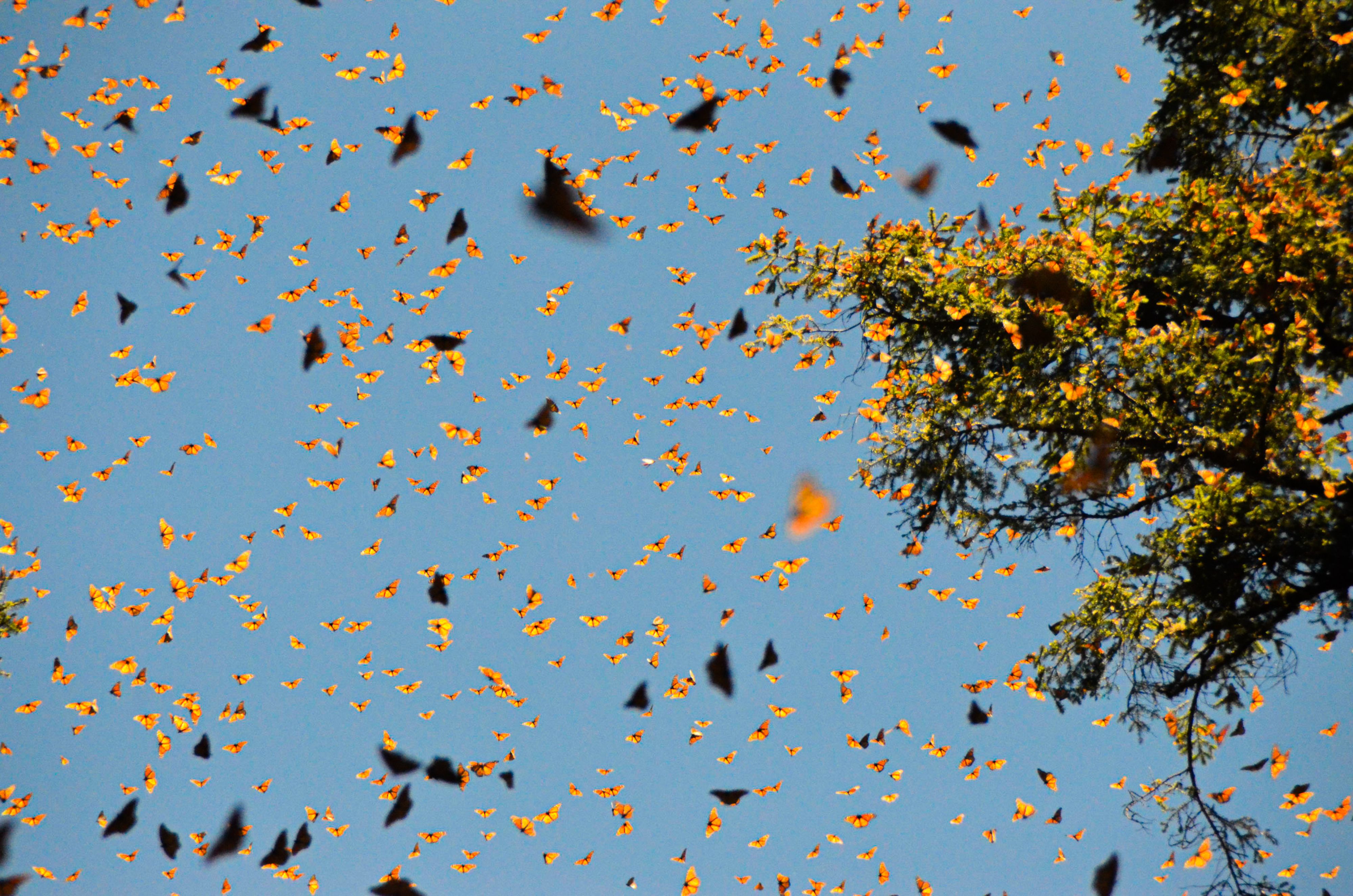
Right now, somewhere in Canada or the northern US, a monarch butterfly is being born that will fly up to 3,000 miles to a forest it has never seen. Every fall the eastern monarchs funnel down to the same 11 or 12 mountaintops on the Michoacán and Estado de México border, where they spend the winter clustered in oyamel fir forests two miles above sea level. They cover 50 to 100 miles a day, and tens of thousands will pack onto a single tree, sometimes enough of them to snap the branch. The trip back north takes three or four generations, so no single monarch ever makes the round trip. And some good news: this past winter they covered 7.24 acres of forest, up 64 percent from the year before. Still below the old numbers, but the right direction.
If a friend forwarded you this, or you want the guides that go deeper than a newsletter can, everything free lives at movetomexiconavigator.com. That's also where to send the questions you want a deep dive on.
Trivia Answer
Mexico is the first country ever to host three World Cups: 1970, 1986, and 2026. The 1986 tournament only happened here because Colombia withdrew and Mexico stepped in. The Estadio Azteca remains the only stadium to have hosted two World Cup finals.
Nos vemos (See you).
Corey